

Ju Hyung Kim
Download PDF
Nov 9 2025
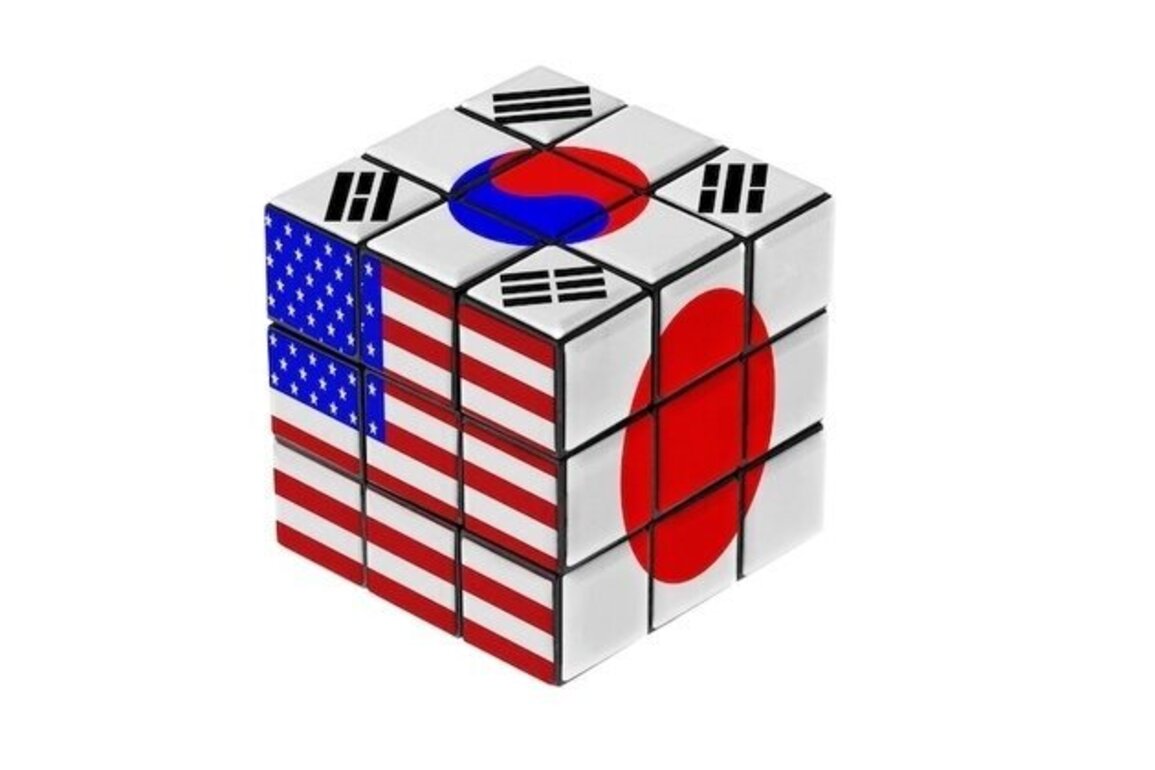
mikeaubry/DepositphotosDuring the 1980s, the US, Japan, and South Korea had reachedwhat many observers describe asa golden age of trilateral security cooperation. US President Ronald Reagan, Japanese Prime Minister Nakasone Yasuhiro, and South Korean President Chun Doo-hwan not only shared their strategic goals but also built personal friendship. Such an intimate relationshipoften shorthanded asRon-Yasuhelped the three countries transform common priorities into policy momentum during the new Cold War era; the relationship offered a unified focus on the common enemy, the Soviet Union, and showcased a clear operational stage in the Western Pacific region. In contrast, the strategic environment of 2025 is far more complex. Yet from the structural point of view, such peculiarity is creating a strong foundation for deeper trilateral cooperation.
Todays US, Japan, and South Korea are facing a gradually consolidating Chinese-Russian partnership, a rapidly increasing North Korean nuclear threat, and the growing probability of a military conflict in the Taiwan Strait. As the Soviet Unions challenge in the 1980s had coerced the trilateral countries to strengthen their alignment, the current threat dynamicsmore multidimensional, networked, and geographically fluidare similarly demanding consistent cooperation based on shared threat perception among Washington, Tokyo, and Seoul.
Three factors contributed to making trilateral coordination in the 1980s productive. First, the security environment offered strategic clarity. Soviet arms escalation in the Far East region, the Afghanistan war, and the deployment of medium-range nuclear missiles in Europe reinforced the common purpose of the democracies. Japans role as a shield and South Korea as a spearhead supplemented the US global strategy. Although conflictual elements occasionally surfaced in the trade sectorautomobile, semiconductor, and dollaryen imbalance issuessuch economic conflicts were relatively separated from security affairs. Second, trust among the leaders functioned as a strong catalyst. Personal intimacy between Reagan and Nakasone reflected ideologically common beliefs such as anti-communism, trust among allies, and deterrence through strength. Irrespective of his domestic political issues, Chun Doo-hwan practically aligned with the US strategy and proactively participated in joint military exercises likeTeam Spirit. Such convergence reduced bureaucratic friction while showcasing alliance resolve against adversaries. Third, institutional habits strengthened the framework for trilateral cooperation. Under the summit-level cooperation, an intricate web of practical cooperationconsultation among staffs, intelligence exchange, joint military exercises, discussion of defense technologywas formulated. Such routine procedures provided some degree of resilience even when political or public pressure rose. This combination of clear threat perception, chemistry among leaders, and bureaucratic memory led to the success of the 1980s.
After four decades, the external environment is far riskier and comprehensive. Despite not being a formal military alliance, the partnership between China and Russia has reached an unprecedented level thanks to networks of mechanisms including theShanghai cooperation organisation(SCO) and other multilateral frameworks. Joint air patrols, naval exercises, and strategic signaling in East Asia blur the operational boundaries. Unlike the 1980s Soviet Union, the China-Russia bloc is simultaneously pressuring the trilateral countries from multiple dimensions including military, intelligence, economy, and so on.
Meanwhile, North Koreas nuclear development has shifted its status from an aspirant to a nuclear-mature nation. Now in its arsenal, it includes solid-fuel medium-range ballistic missiles, limitedMIRVcapability, and an advanced command and control system that shortens the reaction time, while complicating deterrence. Such a threat is not only theoretical but also poses a practical operational threat. Adding to this equation is the Taiwan contingency scenario. The crisis in the Taiwan Strait would inevitably entrap Japan and South Korea. Furthermore, such a contingency would strain regional logistics, missile defense networks, as well as command and control links.If another crisis erupts on the Korean Peninsula in a simultaneous manner, it will disclose how closely these two theaters are deeply interconnected.
Geo-economic interdependence has transformed economic policy into an instrument of strategic competition. Semiconductor supply chains and export-control dependency on critical minerals have become key elements of national security. While there were trade disputes during the 1980s, todays task is to manage competitionin the fields of economy and technologywithin the alliance system. Such structural change has turned todays environment more unstable than the Cold War era. Yet at the same time, it created an incentiveor rather the necessityto deepen cooperation among the US, Japan, and South Korea.
The 1980s continuously offer lessons. The first lesson is the importance of a shared threat narrative. When the three countries agreed on the characteristics of the Soviet threat and its immediacy, domestic divisions subsided while alliance coordination was automatized. Such similar clarity is greatly needed at the current juncture; Taiwan and the Korean Peninsula are functionally interconnected, and what is necessary is the sincere perception that both regions would test alliance deterrence and credibility. The second lesson is the effectiveness of signaling from the leadership level. High-level summitsmost notably the 2023Camp David summitalign bureaucratic systems, assure the public, and display the willingness to deter adversaries. Although personal chemistry cannot substitute policy, it could accelerate consultation when time is short. The third lesson is the exercise-centric integration value. Joint exercises not only enhance overall preparedness but also establish trust among officers and planners. The exercises in 2025 should evolve into a multidimensional formthat integrates air, sea, cyber, space, and electronic spheresthat was unimaginable in the 1980s.
Yet the practices in the 1980s cannot be replicated. The temporary coordination of the USJapan and USROK hub-and-spokes model is no longer sufficient. Deterrence in the modern day necessitates genuine trilateral planning cells that could handle two simultaneous regional contingencies. Moreover, todays cooperation should not overly rely on personal friendship. Leadership change is inevitable, and thus institutionalization should ensure continuity.
In order to implement policy, Washington, Tokyo, and Seoul should take specific measures. The three countries need to establish a Trilateral Planning and Crisis Cell. Staffed by deputy national security advisors and defense-policy directors, the cell should take charge of drafting crisis management manuals, aligning sequential escalation thresholds, and coordinating interceptor and ammunition stockpile management, as well as quarterly scenario-based simulations. The momentum of policy consistency should originate from regular practical tasks, not from ad hoc summits.
The intelligence and data-sharing system should be sealed from political tumult. Agreements like the JapanROKGSOMIAshould be considered key infrastructurebudget-protected and automatically renewedand should be separated from domestic politics. Furthermore, a trilateral data fabricbased on strengthened cybersecurityshould be built so that intelligence fusion among space, air, and maritime sensors can be guaranteed.
The trilateral countries should advance from interoperability to interchangeability. In the fields of integrated anti-air and missile defense, maritime surveillance, anti-drone, and electronic warfare, datalinks should be harmonized, tracking management needs to be standardized, while software-defined EW libraries should be co-developed. Success in this realm would bring a visible deterrent effect as well as public trust. They should also sign a trilateral defense industrial compact. Although trade disputes in the 1980s partially strained alliance relations, if this could be transformed into common productionco-production of ammunition, establishing mutual repair capability, harmonizing export controleconomic competition could be shifted into strategic depth.
The three democracies should prevent historical issues from spilling over into security cooperation by adopting a narrative management strategy. By establishing a standing trilateral public communication forum, coordinating common messages especially during diplomatic crises, and funding common archival and academic projects, they could gradually heighten the threshold regarding the politicization of history. The experience of the 1980s proved that history and political affairs could be separated to a reasonable degree when threat perception was clear.
Furthermore, the alliance should extend the range of cooperation toelectromagnetic spectrum operations(EMSO), cyber, and space areas. A common EMSOcyberspace cell should develop spectrum operational doctrine, cyber red-team evaluation of the defense industry, and coordination of space-based ISR satellites. Such areas regulate the credibility of deterrence in the information age and thus should be jointlyrather than separatelymanaged. Finally, the three capitals should synchronize the legislative cooperative system in order to secure the durability of budgetary and political support. Through regular defense dialogue in the national assemblies, budgets related to co-production and joint exercises should be maintained beyond the political cycle.
The skeptics argue that the unresolved nature of JapanSouth Korean history issues is practically making trilateral cooperation difficult. Yet the 1980s proposes two counterarguments. First, effective cooperation requires a strategic accord rather than historical consensus. The alignment among Reagan, Nakasone, and Chun was possible since they prioritized security necessity over symbolic conflict. The same principle can be applied in todays world; the task is not to erase history but to compartmentalize. Second, an institutional absorption mechanism could de-politicize cooperation. The more the operational mechanismcommon logistics hubs, standardized software structures, and co-produced munitionsis deeply internalized, the less a short-term political impact would crumble cooperation. In this sense, functional integration is the best antidote against historical volatility.
If the abovementioned measures are implemented, the security environment of 2027 could be substantially different. While the permanent trilateral planning and crisis cell would regularly renew the dual contingency manual, the integrated air defense system would share track data smoothly, while co-production lines would provide mutually substitutable ammunition. Furthermore, trilateral cyberspaceEMSO exercises could become an annual activity. Even when the diplomatic mood becomes tense, cooperation in the operational field would continue; and such achievement would be somewhat unthinkable for the previous generation.
Eventually, the similar dynamics that consolidated the three countries in the 1980s are currently still effective. Back then, the Soviet threat clarified priorities and regulated policy debate. And at the current juncture, issues like the Taiwan contingency, a nuclear North Korea, and a coordinated ChinaRussia bloc are placing similar pressure vis--vis the US, Japan, and South Korea. The logic is simple: any single member cannot handle two theaters of war, and only a genuine trilateral structure can synchronize response.
The golden age of the 1980s was possible not merely due to charismatic leaders; it was also because of the strategic interest overlap, reinforcing such overlapping areas through trust among leaders and the bureaucratic system that translated it into daily procedure. Todays task is to institutionalize such clarity so that it could work beyond election cycles. If the 1980s achieved goals through chemistry, a similar objective should be attained through architecture in 2025. The yardstick of success is not an additional summit, but an alliance structure that functions even when friendship falters. In that context, the genuine legacy of the Ron-Yasu era is not nostalgia, but a blueprint of durability under uncertain periods.
Further Reading on E-International Relations
- Opinion Toward a Japan-South Korea Alliance Less Reliant on the US
- The Comfort Women Controversy in the American Public Square
- Opinion Extending South Korea and Japans Joint Development Zone Agreement
- Opinion Japan-South Korea Relations: Breaking the Cycle?
- Opinion Reassessing Military Misconceptions in the American-Japanese Alliance
- Opinion The Impact of an Indecisive America on the Indo-Pacific
About The Author(s)
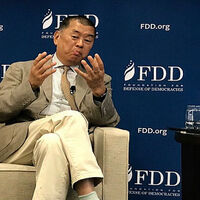
Dr. Ju Hyung Kimserves as a President at the Security Management Institute, a defense think tank affiliated with the South Korean National Assembly. He has been involved in numerous defense projects and has provided consultation to several key organizations, including the Republic of Korea Joint Chiefs of Staff, the Defense Acquisition Program Administration, the Ministry of National Defense, the Korea Institute for Defense Analysis, the Agency for Defense Development, and the Korea ResearchInstitute for Defense Technology Planning and Advancement. He holds a doctoral degree in international relations from the National Graduate Institute for Policy Studies (GRIPS) in Japan, a masters degree in conflict management from the Johns Hopkins University School of Advanced International Studies (SAIS), and a degree in public policy from Seoul National Universitys Graduate School of. Public Administration (GSPA).
TagsJapanSouth KoreaUnited States