

Football is a force for change
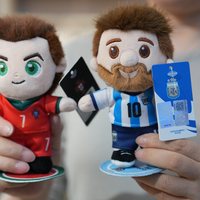
Sport is the fastest pipeline we have to build solidarity and actions for gender equality. And in 2026, that pipeline runs through three host countries, into billions of homes globally, and, most likely, onto the most watched stage in human history. The Men’s World Cup 2026 is the first 48-team tournament in history, with 104 matches, across 16 cities, projected to host five million fans in stadiums, and with sponsorship revenues that will top USD 2.8 billion.
No government, no campaign, no institution on earth has football’s power to make billions of people feel the same thing at the same time. That power, if directed at gender equality, is the most scalable, most emotionally resonant, most culturally penetrating force for change available to the world right now.
The demand for women’s sport is a global phenomenon
Six billion viewers are projected to engage with the 2026 tournament across broadcast, streaming, digital and out-of-home viewing, making it the single most-watched sporting event in the history of global media. That is the most powerful platform any sport has ever had.
The 2023 Women’s World Cup alone drew nearly 2 billion viewers – the largest audience in history for any single women’s sporting event. Women’s football is projected to surpass 800 million fans by 2030, placing it among the world’s five most popular sports. The question is not whether the world is watching women’s sports. It is whether football will use this moment to demand gender equality on the same scale as it demands excellence on the pitch.
Visibility for women’s sport is at a record high
Broadcasting rights for Men’s World Cup 2026 will exceed USD 4.2 billion. Sponsorship revenues will top USD2.8 billion. Attendance is on course to shatter a 32-year record. This is what happens when football invests in its product, expands its reach, and backs its commercial potential without hesitation.
Women’s sport in the UK delivered 397 million viewing hours in 2025, reaching 48 million viewers, an all-time high. American audiences consumed 46 billion minutes of women’s sport in the same year. And still, women’s sport receives just eight per cent of prime-time coverage while generating 13 per cent of prime-time viewing hours. The men’s game spent decades building the commercial infrastructure that now generates billions. Women’s sport is already outperforming its infrastructure, making it the most obvious growth opportunity in sport right now.
The gender pay gap is staggering
FIFA is projecting approximately USD 9 billion in revenues in the Men’s World Cup 2026 year alone. Across the full 2023 to 2026 commercial cycle, revenues are expected to reach USD 13 billion, more than 70 per centabove the previous cycle. Football has never been worth more. The numbers for women’s sport tell the same story of explosive growth: women’s elite sport revenues are projected to hit USD 3 billion in 2026, up 340 per cent in just four years.
Yet not a single woman appears on the Forbes 2025 list of the 50 highest-paid athletes in the world.
The Women’s World Cup prize fund in 2023 was still just a third of the USD 440 million awarded to the men in Qatar, despite a 300 per cent increase since 2019. This is the central contradiction of modern football: the sport generating record billions is the same sport that has never paid women athletes equal to men.
The boardrooms do not reflect the stands
Six billion viewers will engage with the Men’s World Cup 2026. Yet decisions about how that platform is used, what messages it carries, and who it serves are being made right now in boardrooms that do not reflect the stands.
A 2026 survey found that women hold just over 32 per cent of executive positions across international sports federations. According to FIFA, women make up only around 5 per cent of registered football coaches worldwide. At Tokyo 2020, only 13 per cent of coaches at the Olympic Games were women. Decisions about the most commercially powerful tournament in football history is being shaped overwhelmingly by people who have never played as a woman, coached as a woman, or experienced the game from a woman’s perspective.
Violence against women and girls remains endemic, and underfunded
Football brings the world together. It also, the data shows, brings danger closer for millions of women at home. While data is mixed and limited, available research indicates links between major sporting events and increased risks of violence against women and girls. A study by the Brazilian Forum on Public Safety and Instituto Avon, based on four years of microdata across five Brazilian capitals, found that on days when the city’s team plays, threats against women increase by 23.7 per cent and physical assaults by 20.8 per cent. This evidence is consistent with research in the United States (a 10 per cent increase following unexpected losses), England (during the 2010 World Cup), and Scotland (36 per cent increases during derby matches). Women who dedicate their lives to football, as coaches, referees, journalists, and administrators, also face harassment, abuse, and violence that the sport has normalized for too long and measured too rarely. From grassroots clubs to the global stage, the structures that should protect them – reporting mechanisms, safeguarding policies, independent investigations – are inconsistent at best and absent at worst.
Globally, one in three organizations working to end violence against women have been forced to suspend or shut down programmes entirely because of funding cuts, reducing the support available to survivors both inside and outside sport at a moment they need it most.
Girls are lost from the game every single day
There is a girl somewhere right now who will watch her first World Cup match this year. Girls below the age of 14 drop out of sport at twice the rate of boys, not for lack of talent or passion, but because of barriers that accumulate as they grow: poverty, rigid gender stereotypes, pressure to conform, body changes, safety concerns, and a chronic shortage of role models who look like them. Girls who play sport stay in school longer, delay pregnancy, and go on to secure better jobs. UN Women’s One Win Leads to Another programme has built leadership skills in more than 3,200 girls across Brazil and Argentina through sport.
Every girl who leaves the game is a potential leader, innovator, and changemaker lost to the world.
Brazil will host the Women’s World Cup in 2027, the first ever on South American soil, bringing 32 teams to eight cities. Paris 2024 was the first ever gender-equal Olympic Games, proof that historic firsts are still possible.
Every World Cup concentrates the attention of billions. Every World Cup is a chance to move the world. The beautiful game has never had a bigger stage, or a more urgent obligation to use it to demand gender equality for all women and girls.
Access the full list of data sources.